
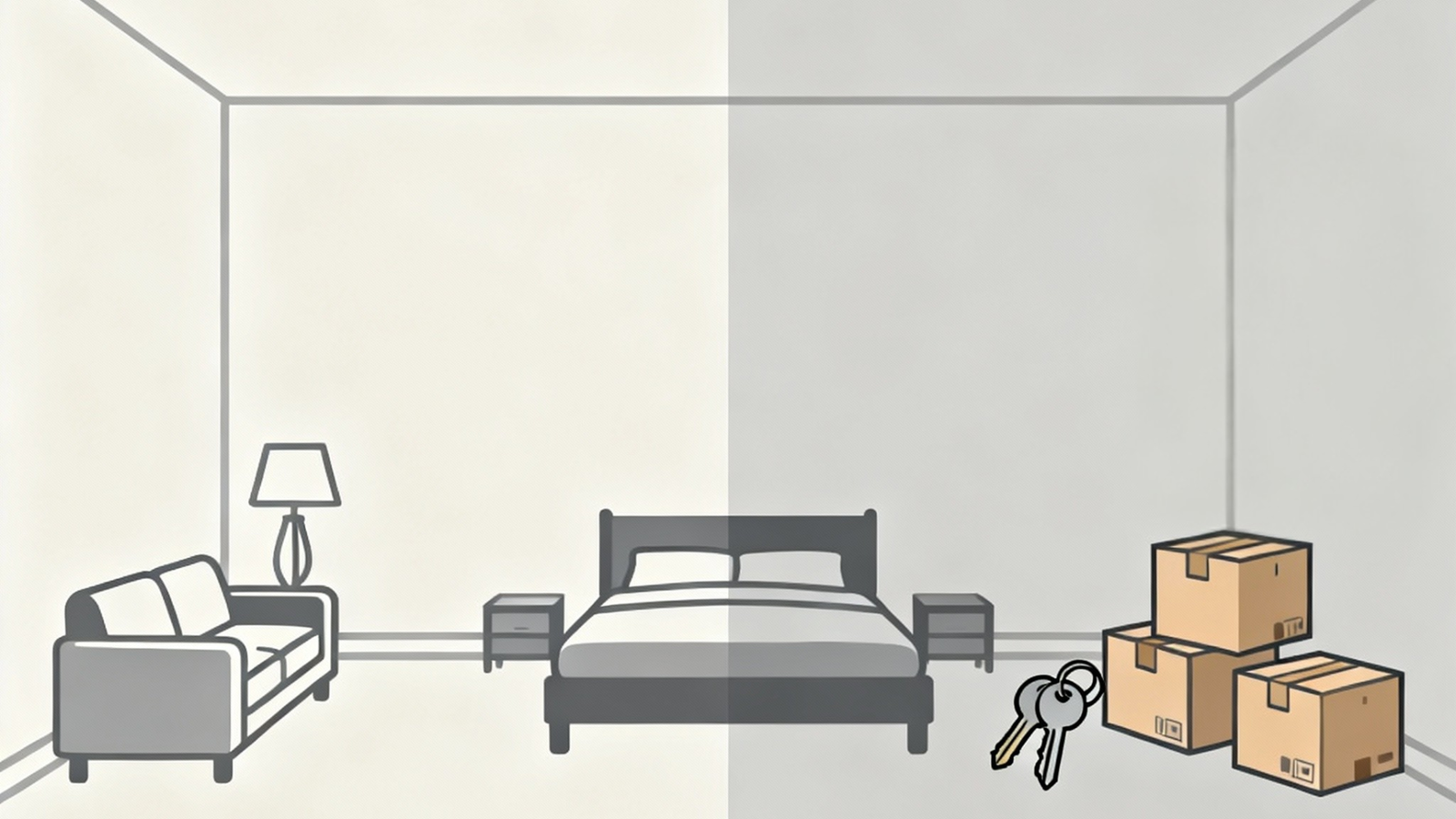
Choosing between furnished and unfurnished housing in Kuwait determines how quickly you can settle, how much personalization you’ll enjoy at home, and how many logistics you’ll need to coordinate in your first weeks. It also shapes your handover obligations, since furnished homes involve inventory considerations, while unfurnished homes often require setup planning before day one. When approached methodically—with clear checklists and realistic timelines—either path can deliver a smooth, confident move‑in.
What “furnished,” “semi‑furnished,” and “unfurnished” usually mean
Furnished: Move‑in ready with core furniture and essential appliances; expect beds, seating, dining, wardrobes/closets, lighting, and major white goods to be in place, plus window treatments and basic fixtures.
Semi‑furnished: Major appliances and fixed elements installed (kitchen appliances, wardrobes, lighting, curtains/blinds), with limited or no loose furniture; you add key pieces like sofas, beds, or tables.
Unfurnished: A clean, functional shell with fixtures, built‑ins, and lighting; you add furniture and, where absent, certain appliances; ideal for full personalization and long‑term layout preferences.
Tip: Always request an inclusion list before viewing, then validate on site. Terminology can vary by building, landlord, and management company—clarity up front prevents surprises later.
Decision framework: convenience, timeline, and personalization
Convenience first: If you need immediate readiness (onboarding, school starts, travel schedules), furnished or semi‑furnished units reduce logistics, deliveries, and assembly.
Personalization first: If you care about ergonomics, aesthetic control, or specialized work‑from‑home setups, unfurnished or semi‑furnished gives you the canvas to tailor layout and quality.
Shipment timing: If your household shipment arrives later than you do, furnished/semi‑furnished bridges the gap; if your shipment is synchronized, unfurnished may be more straightforward.
Tenure and lifestyle: Frequent visitors, entertaining at home, or specific hobbies (music, fitness, crafts) may benefit from configurable space that unfurnished layouts accommodate more easily.
Lease and documentation norms to confirm (no price references)
Inventory schedule (furnished/semi‑furnished): Ensure a detailed list with model numbers where available, counts of each item, and condition notes; attach photos to minimize end‑of‑tenancy disputes.
Condition report (all): Document walls, floors, doors, windows, built‑ins, and bathrooms; include AC units, thermostats, and extractor fans; record current paint condition and any visible scuffs.
Maintenance responsibilities: Clarify who handles routine AC servicing, filter changes, minor repairs, and appliance servicing; confirm how to raise requests and expected response timelines.
Alterations and fixtures: Understand rules on drilling, wall mounts, curtain changes, and paint color; secure written approvals before making modifications.
Early exit and assignment: If your role changes, confirm notice requirements, approved assignee transfers, and what constitutes acceptable handback condition.
Keys, access, and permits: Record the count of keys, fobs, parking remotes, mailbox keys, and any building permits needed for movers or deliveries.
Inspection checklist: furnished vs unfurnished
Furnished focus:
Furniture sturdiness and fit: Check bed frames, mattresses, sofa support, dining chairs, wardrobes; open/close everything to test hinges and slides.
Appliances: Verify operation of refrigerator, oven, stove, dishwasher, washer/dryer; check seals, indicator lights, and cycling.
Lighting and window treatments: Test every switch; confirm curtains/blinds open smoothly and adequately block light in bedrooms.
Soft furnishings: Inspect rugs, upholstery, and mattresses for cleanliness; confirm a deep‑clean before move‑in if needed.
Safety items: Locate smoke alarms, CO sensors if installed, fire extinguishers, and emergency exits; confirm they are functional and accessible.
Unfurnished focus:
Infrastructure readiness: Verify water pressure and temperature mix, drainage, extractor fans, AC cooling performance, and thermostat control.
Kitchen shell: Check counters, cabinets, under‑sink plumbing, and power points; confirm appliance connections (gas/electric) match your intended equipment.
Electrical layout: Map sockets for workspaces, entertainment units, and bedside areas; look for grounded outlets where required.
Storage and built‑ins: Confirm wardrobe depth, shelf spacing, and hanging rails; note if additional storage solutions will be needed.
Walls and floors: Photograph paint condition and any marks; check for gaps around frames and skirting that could admit dust.
Practical move‑in sequencing (seven steps)
Confirm inclusions and condition: Sign off on the inventory or condition report before deliveries, with timestamped photos for your file.
Utilities alignment: Match the account name and address format exactly to official records; prepare building access details for any technician visits.
Elevator and access booking: Reserve service elevators, loading bays, and security permissions for moving day; share contractor details with building management.
Delivery choreography: Stagger deliveries to avoid crowding; place protective coverings in corridors; plan assembly sequencing from largest to smallest items.
IT and connectivity: Confirm router placement, cable routes, and power needs; test signal strength in your work area before committing to furniture layouts.
Safety and comfort: Replace or clean AC filters where appropriate; test smoke alarms; check window locks; request pest control if signs are present.
Final walk‑through: Cross‑check every agreed item and service; keep a punch list of minor snags with target completion dates.
Scope‑based request strategies (negotiate inclusions, not numbers)
Inclusion swaps: Propose substituting items you won’t use (e.g., a bulky dresser) for ones you need (e.g., a desk), keeping the overall scope balanced.
Condition upgrades: Request a repaint in neutral tones, professional deep‑clean, AC servicing before handover, or curtain lining added in bedrooms for light control.
Practical add‑ons: Ask for extra shelving in wardrobes, additional lighting in work corners, or a microwave/washer where missing—simple changes with high daily impact.
Documentation clarity: Secure addenda that list every promised action and the completion timeline; a clear paper trail accelerates follow‑through.
Delivery staging: Where possible, agree that any new or replacement items arrive before your move‑in date to avoid living among boxes.
Maintenance, service requests, and response expectations
Request channels: Confirm the exact portal, email, or phone line for maintenance; capture ticket numbers for every request and save acknowledgments.
AC and ventilation: Kuwait’s climate puts load on HVAC—agree on routine servicing cadence and who schedules it; note filter types and replacement intervals.
Appliances and fixtures: When issues arise, provide model numbers, photos, and short videos; precise details reduce diagnosis time and repeat visits.
Access coordination: If you cannot be present, define trusted access protocols and photo proof of completed work; keep before/after images in your file.
End‑of‑tenancy readiness: Track minor scuffs and touch‑ups during occupancy so your final handback is predictable rather than a last‑week scramble.
Security, access, and building rules
Key and fob inventory: Record quantities on day one; if any device is not working, request repair or replacement immediately.
Visitor and contractor policies: Understand how to pre‑authorize guests and service providers; book slots to avoid delays at the gate.
House rules: Clarify quiet hours, balcony use, pet policies, common‑area etiquette, and waste disposal schedules to prevent compliance issues.
Parking and storage: Note assigned bays, visitor parking protocols, and any storage room allocation; label everything to avoid mix‑ups.
How Movex can streamline the choice
Curated shortlists: Side‑by‑side comparisons of furnished, semi‑furnished, and unfurnished units matched to your timeline, layout preferences, and daily routes.
Inclusion matrix: A clear table of what’s in, what can be added, and what will be removed—so you decide on a complete picture, not assumptions.
Escorted viewings: Route planning across multiple buildings in one session, with live checks against your inspection list to confirm quality and readiness.
Documentation and handover: Inventory schedules, condition reports, access devices, and move‑in permits sequenced so your first week is execution, not admin.
Delivery and setup coordination: Service elevator bookings, technician scheduling, and utility activations timed around your onboarding and family routine.
Quality assurance: A post‑move‑in punch list with target dates and status tracking until every small snag is closed.
The bottom line
Pick furnished or semi‑furnished when time‑to‑habitable is paramount and you want a predictable, low‑logistics landing; pick unfurnished when long‑term comfort and personalization matter most and you’re ready to choreograph setup. The best outcomes come from scope clarity, disciplined inspections, and written commitments—not assumptions. With a coordinated approach to inclusions, documentation, and move‑in sequencing, your Kuwait home can be exactly what you need on day one and still adapt beautifully as your life and work evolve.