
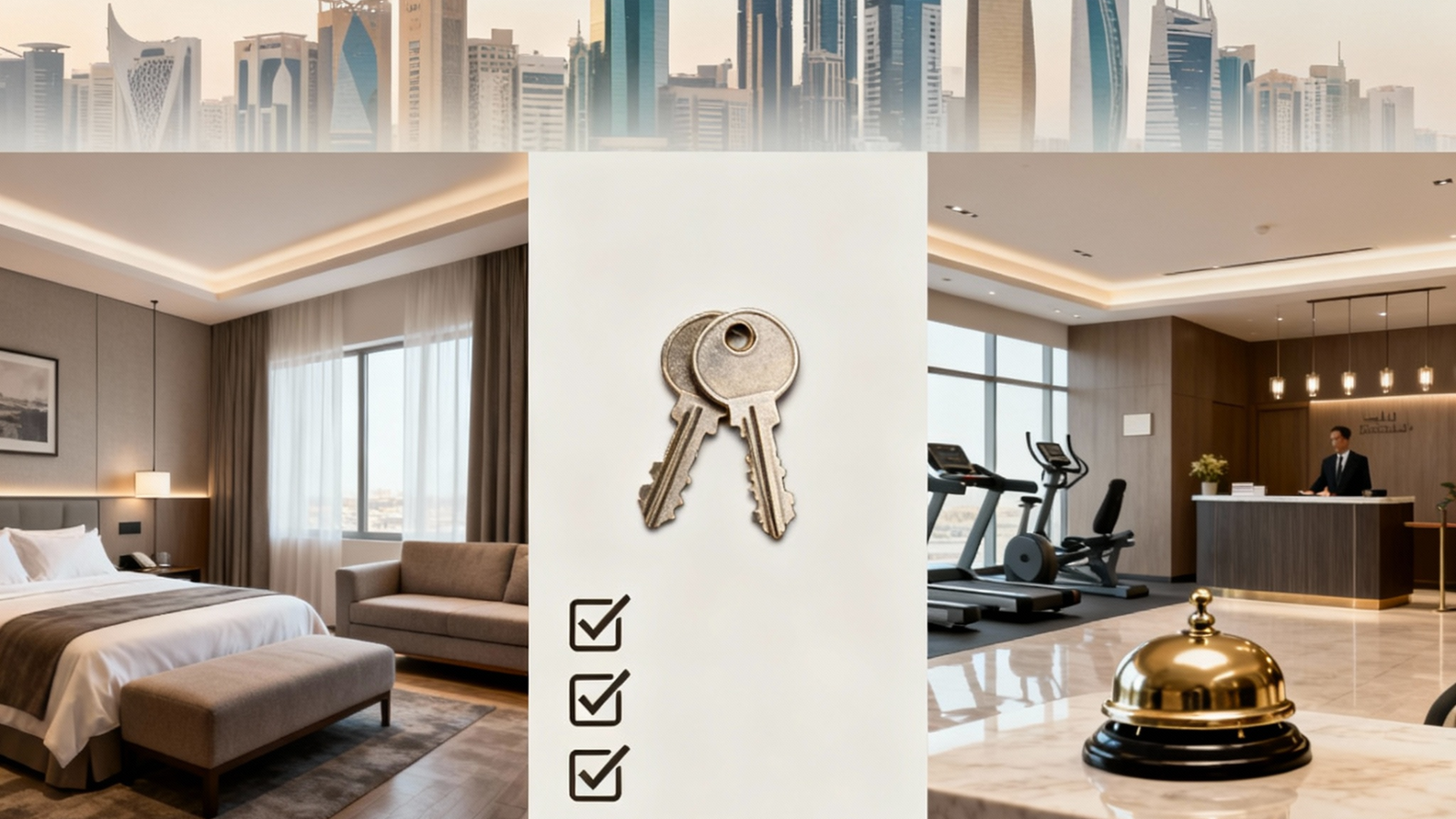
When relocating project talent to Kuwait City for assignments ranging from a few weeks to several months, the first housing decision is often whether to choose corporate housing or serviced apartments. The right fit keeps assignees productive from day one and reduces administrative friction for HR and mobility teams.
Use this guide to compare service inclusions, operating norms, lease flexibility, and day‑to‑day livability—so decisions are made on readiness and quality rather than assumptions.
Quick snapshot
Factor | Corporate Housing | Serviced Apartments |
Typical stay | 30–180 days | 7–90 days (often weekly options) |
Furniture | Fully furnished apartments | Hotel‑grade furnishings and linen service |
Inclusions | Wi‑Fi, utilities, scheduled cleaning | Daily cleaning, front‑desk support, gym/pool (property dependent) |
Flexibility | Corporate contract, consolidated billing | Front‑desk billing cadence; shorter notice windows |
Ideal for | Project teams seeking a home‑like setup | Short assignments or executives expecting hotel‑style services |
TL;DR: For stays beyond 30 days where a home‑like setup and routine matter, corporate housing often aligns best; for shorter visits where hotel‑style service is essential, serviced apartments typically fit better.
Definitions: what each option means
Corporate housing: Professionally managed apartments leased to businesses under a corporate contract, with consolidated billing, defined inclusions (e.g., Wi‑Fi, utilities, scheduled cleaning), and predictable move‑in processes.
Serviced apartments: Hotel‑licensed apartments with 24/7 reception (property dependent), daily housekeeping, on‑site amenities (e.g., gym/pool), and shorter cancellation windows typical of hospitality operations.
Note: Short‑term “furnished” listings on portals may span both models; always confirm license type, service frequency, and house rules.
Service profile by area (readiness view)
Area | Availability patterns | Commute orientation | Lifestyle cadence |
Salmiya | High demand; book earlier for peak months | Coastal routes into the city; workable for mixed office/leisure routines | Vibrant seaside district with strong dining/retail access |
Sharq (Downtown/CBD) | Strong weekday inventory; faster fills around events | Walkable to ministries/banks; ring‑road access | Business‑centric, high daytime activity |
Mahboula/Fahaheel | Consistent options near industrial corridors | Efficient for Al Zour/Shuaiba and southern sites | Quieter residential rhythm, practical weekday routines |
Use escorted orientation to validate commute windows, school runs, and clinic proximity at real times of day before shortlisting.
Pros and cons at a glance
Option | Pros | Cons |
Corporate housing | Larger living space; full kitchens; consolidated admin; predictable inclusions | Typically business‑hours check‑in; fewer on‑site hospitality services; cleaning often weekly |
Serviced apartments | 24/7 reception; daily housekeeping; on‑site amenities; rapid issue resolution | Smaller kitchens/common areas in some properties; hospitality‑style policies may be less flexible for longer stays |
Location and commute tips
Salmiya: Coastal connectivity and lively evening options; plan route tests for morning and evening peaks.
Sharq/Downtown: Walkable access to commercial and government hubs; verify parking allocation and building access rules.
Mahboula/Fahaheel: Practical for southern industrial corridors; schedule a full weekday route rehearsal to key sites.
Contract and booking terms compared (no monetary references)
Clause | Corporate Housing | Serviced Apartments |
Minimum stay | Commonly 30 nights | Often 7 nights (some shorter) |
Confirmation windows | Corporate agreement with defined terms | Front‑desk or reservation‑led confirmations |
Cancellation | Longer notice windows typical of residential operations | Shorter hospitality‑style notice windows |
Billing cadence | Consolidated monthly or by term | Front‑desk or periodic billing per reservation policy |
Check‑in/out | Business‑hours coordination common | 24/7 front desk (property dependent) |
Tip: Request a simple “inclusions sheet” and “service frequency schedule” with every offer so expectations are unambiguous before check‑in.
Watch‑outs to prevent friction
Utility usage thresholds: Some contracts outline utility usage expectations; clarify how over‑usage is handled and how readings are recorded.
Licensing and house rules: Serviced apartments follow hospitality‑style policies; confirm guest, visitor, and noise rules upfront.
Parking allocation: Downtown/CBD buildings may require specific parking allocations; verify bay assignments and access media at handover.
Check‑out and extension: Hospitality properties follow daily inventory cycles; confirm extension protocols to avoid last‑minute room changes.
Move‑in logistics: Book service elevators in advance, share mover details with building management, and verify loading dock rules.
Who should choose what?
Scenario | Best fit | Why |
45‑day system‑install project | Corporate housing | Home‑like routine, full kitchen, and consolidated admin for project leads |
10‑day executive visit | Serviced apartment | Daily housekeeping and 24/7 reception streamline short stays |
Rotational crews (e.g., 28/28) | Serviced or hybrid | Flexible check‑in/out; predictable service cadence between rotations |
Family relocating for 6 months | Corporate housing | More space and residential features suited to family routines |
Due diligence checklist (copy/paste)
License type and house rules confirmed (property certificate or written confirmation)
Inclusion list: Wi‑Fi speed tier, utilities, cleaning frequency, linen/towel cadence
Kitchen inventory: cookware, appliances, fridge/oven specs, laundry availability
Building services: reception hours, maintenance request channel, gym/pool access rules
Security and access: keys/fobs count, visitor protocols, parking bay assignment
Noise/light checks: evening and early‑morning assessments in bedrooms
Internet reliability: speed test in living room and workspace at peak hours
Move‑in logistics: service elevator booking, loading bay access, contractor permissions
Handover documentation: condition report with photos; access inventory signed
FAQs
Are corporate housing units regulated like hotels?
Some furnished apartments operate under hospitality licenses; others are corporate‑lease residential units. Ask for the license type and house rules in writing.Are pets allowed?
Policies vary by building. Serviced apartments often have stricter pet rules; corporate housing may be negotiable. Always obtain written approval and house rules in advance.Can we blend both models for one assignment?
Yes. A common approach is week‑one in a serviced apartment (for late arrivals and 24/7 support) followed by a move to corporate housing for the remainder.What should be verified before signing?
Inclusions sheet, service frequency schedule, access/parking rules, cancellation window, and move‑in/out coordination (elevator, loading, contractor access).
Next steps
Shortlist request: Ask for a side‑by‑side inclusions sheet for two corporate housing options and two serviced apartments in your preferred area.
Route testing: Schedule escorted orientation to validate commute, school runs, and clinic proximity at real times.
Handover plan: Confirm condition report, keys/fobs inventory, and service elevator booking in a single checklist before move‑in.
Bottom line
Decide based on assignment duration, service expectations, and day‑to‑day routine—then document inclusions and house rules before you confirm. For long stays where home‑like living matters, corporate housing typically delivers the best routine; for short, service‑intensive trips, serviced apartments keep everything effortless. If needed, combine both for a smooth start‑up week and a stable mid‑term base.